



Tags
Tungsten carbide flux-cored wire
Milestone Co6 Cobalt-Based Flux-Cored Welding Wire
Milestone CoUTM R31233
flux-cored wire
Cobalt-based Alloy Cored Wire for Automatic TIG Welding
cobalt-based alloy cored welding wire
Global Distributor Recruitment
cobalt-based metal cored wire
Cobalt-based cored wire
Thermowell
Wear and tear protection
Laser cladding welding
cobalt-based surfacing wire
cobalt-based alloy surfacing

- HOME
-
PRODUCTS&SERVICES
- Welding Consumable
- Cobalt Based Alloy Cored Wire>
- Tungsten Carbide Cored Wire>
- Nickel based Alloy Cored Wire>
- Fe-based Flux Cored Wire>
- Welding Service
- Single/Double Tungsten Hot Wire TIG>
- Double Tungsten Hot Wire TIG Pipe Welding>
- GMAW / FCAW / CMT Welding>
- Submerged Arc Welding (SAW)>
- Electroslag Welding (ESW)>
- Laser Coaxial Hot-Wire DED-W>
- Hybrid Welding (Laser + TIG)>
- Shielded Metal Arc Welding (SMAW)>
-
INDUSTRY
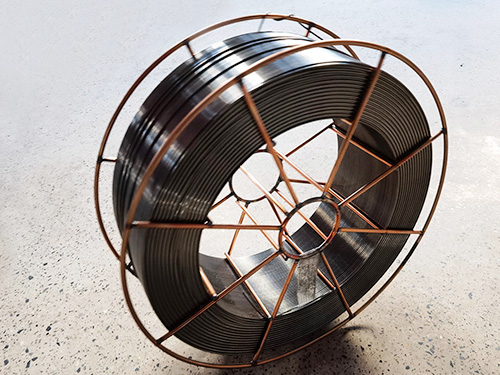
INDUSTRY APPLICATIONS:Pangu alloy welding materials mainly include various types of welding materials such as iron-based alloys, stainless steel, nickel based alloys, cobalt based alloys, copper based alloys, aluminum alloys, titanium alloys, and metal based ceramics. The product is widely used in many industries such as ships, marine engineering, petrochemicals, boilers, pressure vessels, electricity, machinery, pipelines, vehicles, etc.
-
NEWS
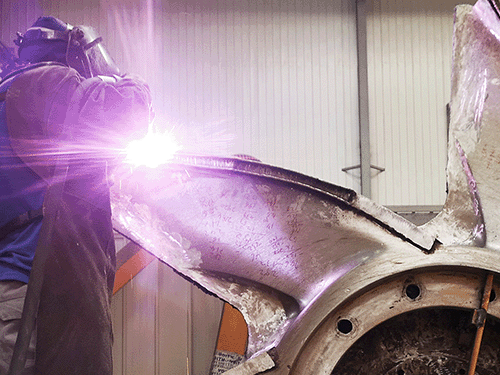
NEWS:As a professional welding company, Pangu Alloy possesses and masters industry-related welding materials and welding methods. All welding processes comply with domestic and international standards such as GB/ASME/NACE/API. For customers\' special needs, we also provide innovative customized services.
-
SUPPORT
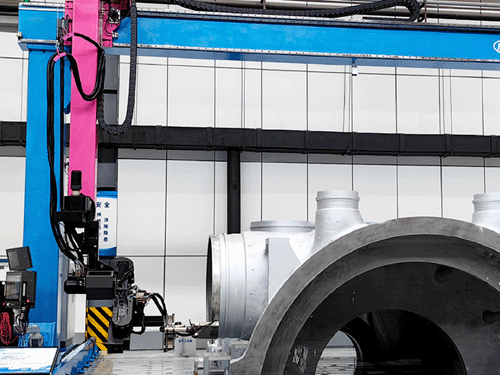
SUPPORT:Pangu Alloy and AMET Tianjin Company are the manufacturing, sales, technical support, and after-sales service centers of AMET in the Asia Pacific region. They provide mechanical actuators and special welding fixtures for AMET global users, as well as product sales, technical support, and after-sales service for users in the Asia Pacific region..
-
COMPANY
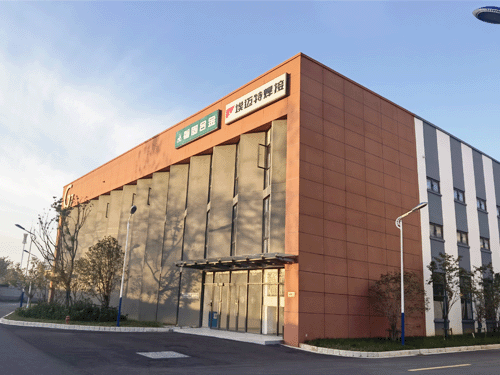
COMMPANY:Pangu Alloy and AMET Tianjin Company are the manufacturing, sales, technical support, and after-sales service centers of AMET in the Asia Pacific region. They provide mechanical actuators and special welding fixtures for AMET global users, as well as product sales, technical support, and after-sales service for users in the Asia Pacific region..
- CONTACT