Hydrogen-based metallurgy solutions for high-temperature, wear-resistant components
Hydrogen reduction/hydrogen metallurgy high-temperature wear-resistant components represent an environmentally friendly metallurgical process that involves hydrogen reduction combined with additive manufacturing under high-temperature, hydrogen-rich conditions to produce parts resistant to high temperatures, wear, and hydrogen embrittlement. These components are primarily used for wear-prone components such as linings, blades, nozzles, and roller sleeves in hydrogen metallurgy shaft furnaces/reactors.
1. Core Definition: Hydrogen Reduction: Using H₂ as the reducing agent, metal oxides (e.g., Fe₂O₃, Cr₂O₃, NiO, WO₃) are reduced to pure metals or alloys at temperatures ranging from 600–1200°C. The reaction equation is: MO + H₂ → M + H₂O.
Hydrogen Metallurgy: Zero-Carbon/Low-Carbon Metallurgy Replacing Carbon with Hydrogen, Primarily Through Hydrogen-Based Vertical Furnace Direct Reduction (DRI) at 950–1050°C to Produce Sponge Iron from Iron Ore.
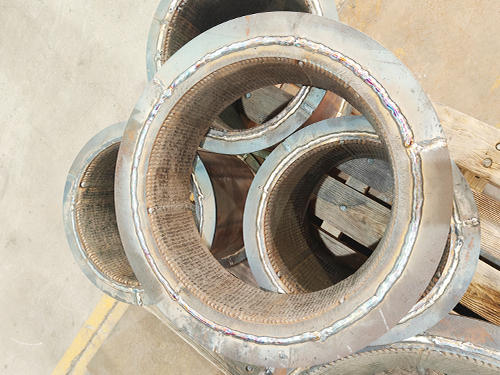
High-temperature wear-resistant components: Structural parts used in hydrogen metallurgical furnaces operating at 800–1100°C under hydrogen corrosion and material erosion conditions must simultaneously exhibit high-temperature strength, wear resistance, hydrogen embrittlement resistance, and creep resistance.
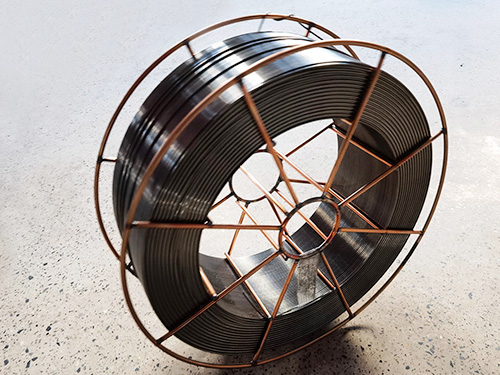
II. Customized Wear-Resistant Cladding Technology Solution To address this challenge,AMET Intelligent Manufacturing employs Zest CA2269-G flux-cored welding wire, strictly adhering to the ISO 14700 Fe16 standard. The solution involves full inner-wall cladding reinforcement for critical wear-prone components of DRI pneumatic conveying systems—including sleeves, conveying elbows, conical pipes, and bushings—creating a highly stable high-temperature wear-resistant protective layer.
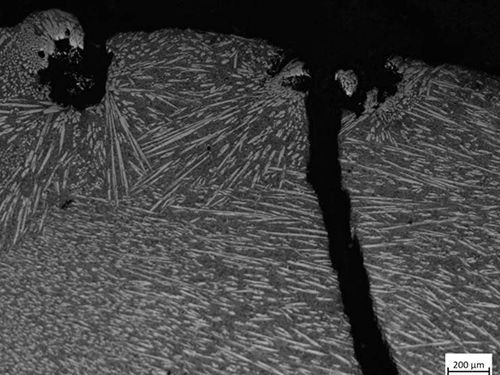
1. Core Performance Parameters of Welding Material Hardness Performance: The cladding layer achieves a hardness of 60–65 HRC, with a microhardness exceeding 660 HV. It maintains excellent hardness stability even at temperatures above 730°C, effectively resisting cutting and impact wear from DRI particles.
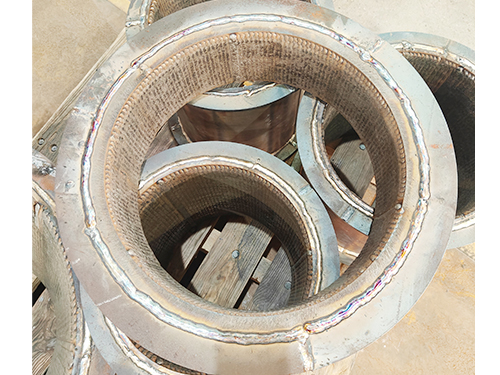
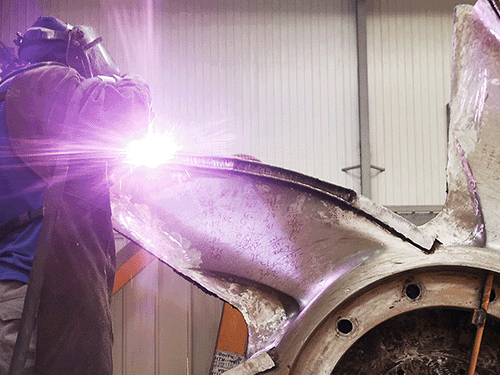
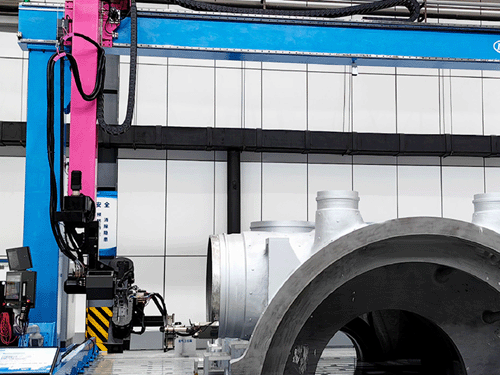
Process Adaptation: Utilizes a mature automatic cladding process, resulting in uniformly formed cladding layers with high bonding strength and free from defects such as pores or cracks. This method is suitable for internal wall reinforcement of various irregular-shaped structural components.
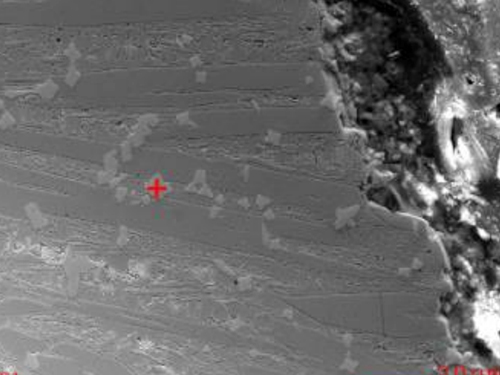
Characteristics of the component overlay welding process: During the welding process, thermal input is strictly controlled to prevent deformation of the base material and ensure dimensional accuracy of the components; The multi-layer overlay structure forms a gradient wear-resistant layer that maintains high surface hardness while preserving substrate toughness, effectively cushioning material impact; The thickness of the overlay layer is uniformly controllable, allowing customization of reinforcement schemes based on actual wear conditions, achieving "on-demand protection."
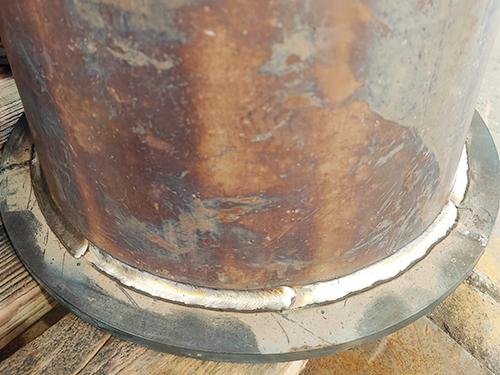
In today's rapidly evolving hydrogen metallurgy landscape, wear protection for critical equipment has become a pivotal factor influencing production efficiency and cost control. Emmett Intelligent Manufacturing's cladding wear-resistant solution addresses the industry-wide challenge of high-temperature wear in DRI pneumatic conveying systems through precise material selection and proven cladding processes, delivering reliable wear resistance to drive high-quality development in the hydrogen metallurgy sector.